

Blessings carry a special kind of warmth, no matter what language they’re spoken in. If you’ve ever wanted to know how to say God bless in Spanish, you’re not alone — it’s one of the most searched phrases among people learning Spanish for family, faith, or everyday connection. This guide breaks down the meaning, the different ways to say it, and when each version fits best.
Whether you’re writing a heartfelt message, greeting a loved one, or simply want to understand the cultural weight behind this phrase, this guide walks you through everything you need to know about how to say God bless in Spanish with confidence and sincerity.
Understanding the Meaning Behind “God Bless”

“God bless” is a short but powerful phrase used to express a wish for someone’s wellbeing, protection, or happiness. It carries spiritual weight, often invoking a higher power to watch over the person being blessed.
In English, the phrase is flexible — it can be said after a sneeze, at the end of a letter, during a farewell, or as a heartfelt wish during difficult times. The core idea stays the same across cultures: a hope that something greater than ourselves will look after the person we care about.
Why People Say “God Bless You” in Everyday Life
People say “God bless you” for many different reasons, and the context often shapes the emotional weight behind the words.
- After someone sneezes, as a lighthearted social custom
- When saying goodbye to a loved one before a trip or long separation
- At the end of letters, cards, or text messages as a warm sign-off
- During moments of grief, illness, or hardship as a form of comfort
- As a genuine expression of gratitude toward someone who helped you
- In religious or spiritual settings, such as church services or prayers
Each of these situations calls for a slightly different tone, and Spanish offers phrases that reflect that same range of emotion.
How to Say God Bless in Spanish
The most direct and commonly used translation of “God bless you” in Spanish is “Dios te bendiga.” This phrase is informal and used when speaking to someone close to you, such as a friend, family member, or peer.
If you want to say “may God bless you” with a slightly more formal or emphatic tone, you would say “Que Dios te bendiga.” Adding “Que” at the beginning softens the phrase into more of a heartfelt wish rather than a direct statement, which is why it’s often preferred in written messages, cards, and emotional farewells.
Common Ways to Say “God Bless You” in Spanish
Spanish offers several variations of this phrase depending on who you’re speaking to and how formal the situation is. Here’s a simple breakdown:
| English Phrase | Spanish Phrase | When to Use It |
| God bless you (informal) | Dios te bendiga | Speaking to a friend, family member, or peer |
| God bless you (formal, male) | Dios lo bendiga | Speaking to a man you address formally |
| God bless you (formal, female) | Dios la bendiga | Speaking to a woman you address formally |
| God bless you all (plural) | Dios los bendiga | Speaking to a group of people |
| May God bless you | Que Dios te bendiga | A softer, more heartfelt version of the phrase |
| Bless you (after a sneeze) | Salud | A casual, everyday response to sneezing |
Choosing the right version comes down to formality and audience — the same way English speakers might say “bless you” casually but “God bless you and your family” in a more heartfelt moment.
May God Bless You: Expressing Sincerity in Spanish
When you want to add sincerity and emotional depth to your blessing, “Que Dios te bendiga” is the phrase to use. The word “Que” transforms a simple statement into a heartfelt wish, similar to how “may” softens “God bless you” into “may God bless you” in English.
This version is especially common in:
- Farewell messages before a long trip or major life change
- Cards for weddings, graduations, or new beginnings
- Comforting words during illness or hardship
- Written messages meant to convey warmth and sincerity
Native Spanish speakers often reach for this version specifically because it feels less abrupt and more emotionally rounded than the shorter form.
Bless You in Spanish: When and How It’s Used
Interestingly, when someone sneezes in a Spanish-speaking country, you typically won’t hear “Dios te bendiga” at all. Instead, the common response is “Salud,” which literally translates to “health.”
This distinction matters because it shows how context changes the appropriate phrase entirely:
- Salud — used casually after a sneeze, similar to “bless you” in English
- Dios te bendiga — used in more meaningful, heartfelt, or spiritual contexts
- Que Dios te bendiga — used for emotional farewells, letters, or sincere wishes
Understanding this difference helps avoid an overly formal or spiritually weighted phrase in a lighthearted moment like a sneeze.
How Do You Say “Blessings” and “Blessed” in Spanish
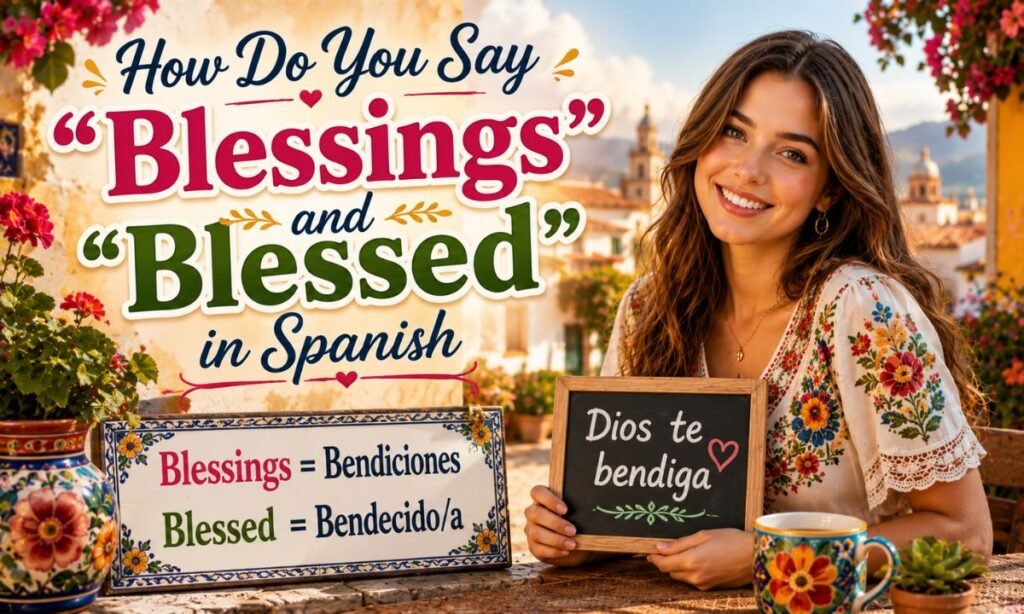
Beyond the phrase “God bless you,” you may also want to know how to express related words like “blessings” and “blessed.”
- Blessings translates to “Bendiciones”
- Blessed translates to “Bendecido” for a male subject, or “Bendecida” for a female subject
- To bless as a verb is “Bendecir”
These words are commonly used in messages, social media captions, and everyday conversations. For example, someone might say “Me siento bendecida” to express “I feel blessed,” or simply write “Bendiciones” as a warm closing to a message.
How to Say “God Bless You and Your Family” in Spanish
Extending a blessing to someone’s entire family adds an extra layer of warmth. In Spanish, this is expressed as:
“Que Dios te bendiga a ti y a tu familia.”
This phrase is commonly used during holidays, farewells, or moments of hardship where you want to extend goodwill not just to one person, but to their entire household. It reflects the value many Spanish-speaking cultures place on family unity and collective wellbeing.
Spiritual and Emotional Uses of “God Bless You” in Spanish Culture
In many Spanish-speaking countries, blessings are woven deeply into daily life, especially within families with strong religious traditions. Parents often bless their children before they leave the house, and elders are frequently asked for their blessing during important life events like weddings or graduations.
This phrase isn’t limited to formal religious settings — it appears in everyday speech, text messages, and social media posts as a natural way to express care. The emotional weight behind “Dios te bendiga” often carries the same comfort and sincerity that “God bless you” carries in English, if not more, given how frequently it’s used as a genuine expression of love and protection.
How to Say “May God Be With You” and Other Related Blessings
Beyond “God bless you,” there are several related phrases worth knowing:
- May God be with you — “Que Dios te acompañe”
- God protect you — “Que Dios te proteja”
- God keep you safe — “Que Dios te guarde”
- God watch over you — “Que Dios te cuide”
These phrases are often used interchangeably with “Dios te bendiga,” depending on the specific sentiment someone wants to express — whether it’s protection, companionship, or safety.
The True Blessings of Language and Faith

Learning how to say “God bless” in another language is about more than memorizing words — it’s about understanding the emotional and cultural context behind them. Spanish offers a rich variety of blessings that reflect warmth, faith, and genuine care for others.
Whether you’re using “Dios te bendiga” with a close friend or “Que Dios te bendiga a ti y a tu familia” for someone’s entire household, these phrases carry a sincerity that transcends translation. Language becomes a bridge, allowing you to share comfort and goodwill across cultures.
Frequently Asked Questions?
What is the most common way to say “God bless you” in Spanish?
The most common and widely used phrase is “Dios te bendiga,” used in informal, everyday situations with people you know well.
Is “Dios te bendiga” the same as “Que Dios te bendiga”?
They carry the same meaning, but “Que Dios te bendiga” is softer and more heartfelt, often used in written messages or emotional moments.
What do you say in Spanish after someone sneezes?
After a sneeze, Spanish speakers typically say “Salud,” which means “health,” rather than a religious blessing.
How do you say “God bless you” formally in Spanish?
For formal situations, you would say “Dios lo bendiga” to a man or “Dios la bendiga” to a woman.
How do you say “blessings” in Spanish?
“Blessings” translates to “Bendiciones,” a word commonly used in messages, cards, and social media posts.
Can I say “God bless you and your family” in Spanish?
Yes, you would say “Que Dios te bendiga a ti y a tu familia” to extend the blessing to someone’s entire household.
Is “God bless you” used often in Spanish-speaking cultures?
Yes, blessings are deeply woven into everyday life in many Spanish-speaking cultures, often used in family settings, farewells, and moments of care.
Conclusion
Knowing how to say God bless in Spanish opens the door to expressing warmth, faith, and genuine care across cultures. From the simple and heartfelt “Dios te bendiga” to the more formal “Dios lo bendiga” or the family-inclusive “Que Dios te bendiga a ti y a tu familia,” each version carries its own tone and purpose.
Whether you’re writing a message, saying goodbye to someone you love, or simply want to understand the cultural depth behind this phrase, these blessings remind us that kindness and faith are languages of their own — understood and felt no matter where they’re spoken.

John Howdy is a dedicated author at Bless Spring with over four years of professional writing experience. He specializes in creating informative, engaging, and SEO-friendly content for a global online audience. His work focuses on delivering well-researched insights in a clear and reader-friendly style. Through Bless Spring, John consistently shares valuable articles that educate, inspire, and support digital readers.
