
“Bless your heart” is a Southern American expression that can mean sympathy, thanks, or gentle teasing, depending on the tone and the situation. Said warmly, it is a kind phrase. Said with a flat or sharp tone, it can be a polite way of expressing pity or mild criticism.
This guide explains the dictionary meaning, the three main ways people use the phrase, where it comes from, and whether it counts as an insult. You will also find everyday examples and simple tips for using it kindly and replying to it.
The Dictionary Meaning
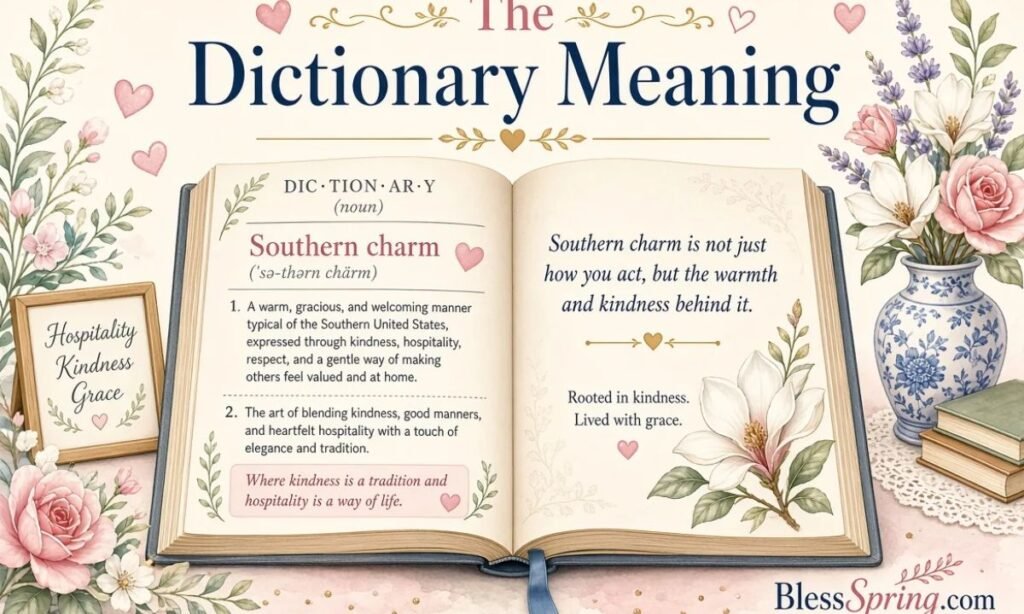
In dictionaries, “bless your heart” is listed as an informal expression, most closely tied to the Southern United States. It is used to show sympathy, affection, or gratitude toward someone.
The phrase is a short form of a blessing, wishing the person well. In everyday speech, though, the literal religious meaning has faded, and the tone of voice now matters more than the words.
- Literal sense: a kind wish for someone’s well-being
- Everyday sense: sympathy, thanks, or affectionate teasing
- Sarcastic sense: polite criticism or pity, often with a smile
The Three Main Ways People Use It
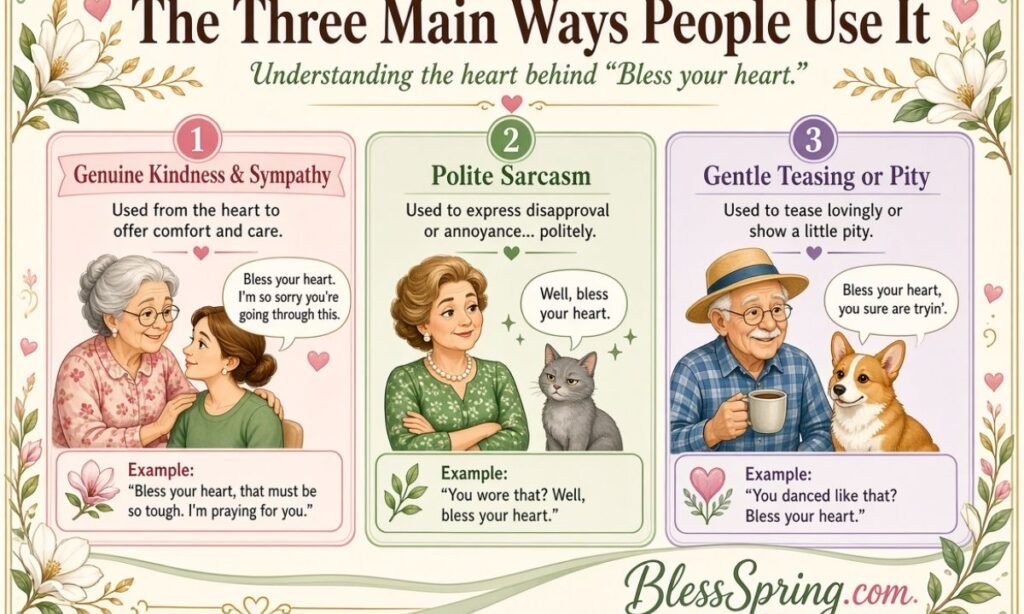
Most uses fall into three groups. Reading the situation and listening to the tone usually tells you which one applies.
1. To show sympathy
This is the most traditional use. The speaker feels sorry for someone who is going through something difficult, such as an illness, a loss, or a bad day.
- “She lost her keys again, bless her heart.”
- “Bless your heart, you’ve had such a long week.”
In these cases, the phrase works like “that’s so sad” or “I feel for you,” and it is meant sincerely.
2. To say thank you
Sometimes the phrase expresses warm appreciation for a kind act. It can be a way of saying “that was so thoughtful of you.”
- “You brought soup? Bless your heart.”
- “Bless your heart for driving all this way.”
The effort touches the speaker, and the phrase works as a heartfelt thank-you.
3. To gently tease
Among friends and family, the phrase can be a playful way to poke fun at a harmless mistake. The tone is light, and a smile usually comes with it.
- “You tried to cook without a recipe? Bless your heart.”
- “He wore two different shoes to church, bless his heart.”
Here it works like an affectionate “oh, you.” Between people who know each other, it is rarely meant to hurt.
Where the Phrase Comes From
The exact origin of “bless your heart” is not documented with certainty. It is generally linked to the Southern United States, where blessing phrases are common in everyday speech.
Language scholars often connect it to older English blessing expressions such as “God bless you,” which were shortened over time. The idea of blessing a person’s heart, meaning their inner self, fits a long tradition of kind, faith-influenced greetings.
Several popular stories about its origin circulate online, but most are tradition or guesswork rather than proven history. What is clear is that the phrase has long been part of Southern speech and is now known across the country.
Is “Bless Your Heart” an Insult?
It can be, but it is not always one. The phrase becomes an insult only when the tone is sarcastic or the speaker is clearly looking down on someone.
- Not an insult: when it expresses sympathy, thanks, or fond teasing
- Mild insult: when it follows a criticism or is said with a cold, sweet-sounding tone
- Passive-aggressive: when it is used to say something unkind in a polite way
A well-known example is a phrase like “Well, bless her heart” said after someone criticizes another person. In that case, it softens the criticism while still delivering it. Context, relationship, and tone are the best clues.
Examples in Everyday Conversation
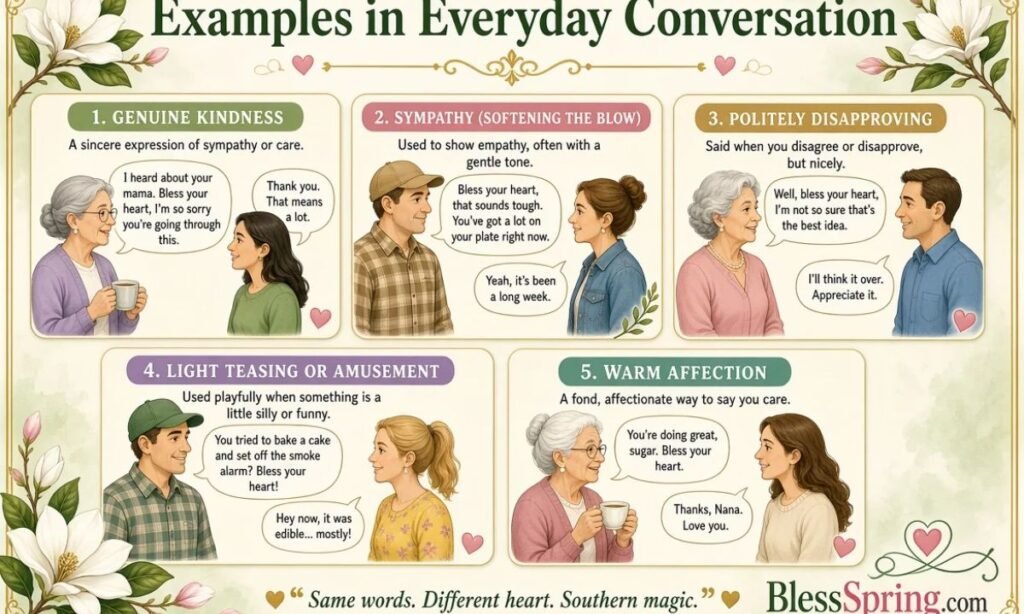
Here are a few short examples that show how the phrase changes with the situation.
- Sympathy: “My neighbor’s car broke down on the way to the interview. Bless her heart.”
- Thanks: “You stayed late to help me? Bless your heart.”
- Teasing: “He tried to fix the sink himself, bless his heart.”
- Sarcastic: “She thinks that hairstyle looks good, bless her heart.”
- Child or pet: “Bless his heart, he’s so tired from the trip.”
Notice how the same words can feel kind, funny, or sharp. The surrounding sentence and the speaker’s voice make the difference.
How to Use It Kindly
If you want to use the phrase warmly, a few simple habits help.
How to Reply
- Say it with a soft, sincere tone and a gentle smile.
- Use it for sympathy or thanks rather than for criticism.
- Avoid it when talking about someone who is not present and might be hurt by it.
- Skip it with people unfamiliar with the phrase, since they may take it the wrong way.
- Add a clear follow-up such as “that was so thoughtful” when you want to be sure your meaning is understood.
If you are not from the South, you can still use it, but it helps to be careful and clear.
How you reply depends on how the phrase was meant. Listen to the tone first.
- If it was kind: “Thank you, that means a lot.”
- If it was thanks: “You’re welcome, happy to help.”
- If it was teasing: “Ha, I’ll do better next time.”
- If it felt sarcastic: a calm “Thanks” or a light “I’ll take that as a compliment” usually works.
You do not need to respond to every tone. Staying polite and relaxed keeps the conversation friendly.
Frequently Asked Questions
What does bless your heart mean?
It is a Southern American phrase used to show sympathy, thanks, or gentle teasing. The exact meaning depends on tone and context.
Is bless your heart a compliment?
Sometimes. It can be a compliment when it expresses thanks or affection, but it can also be a polite way of pitying or criticizing someone.
Is bless your heart always an insult?
No. Many people use it sincerely and warmly, especially for sympathy or appreciation.
Where is bless your heart used?
It is most common in the Southern United States, but it is understood across the country and in many English-speaking communities.
How can I tell if it is sarcastic?
Listen to the tone and look at the context. A cold, overly sweet voice after a critical comment usually signals sarcasm.
Can I say bless your heart to a friend?
Yes, as long as your tone is warm and your friend understands the phrase. Among friends, it often works as sympathy or playful teasing.
What should I say if someone says it to me?
A simple “Thank you” is usually enough. If the tone feels sharp, a calm reply keeps things friendly.

John Howdy is a dedicated author at Bless Spring with over four years of professional writing experience. He specializes in creating informative, engaging, and SEO-friendly content for a global online audience. His work focuses on delivering well-researched insights in a clear and reader-friendly style. Through Bless Spring, John consistently shares valuable articles that educate, inspire, and support digital readers.
